
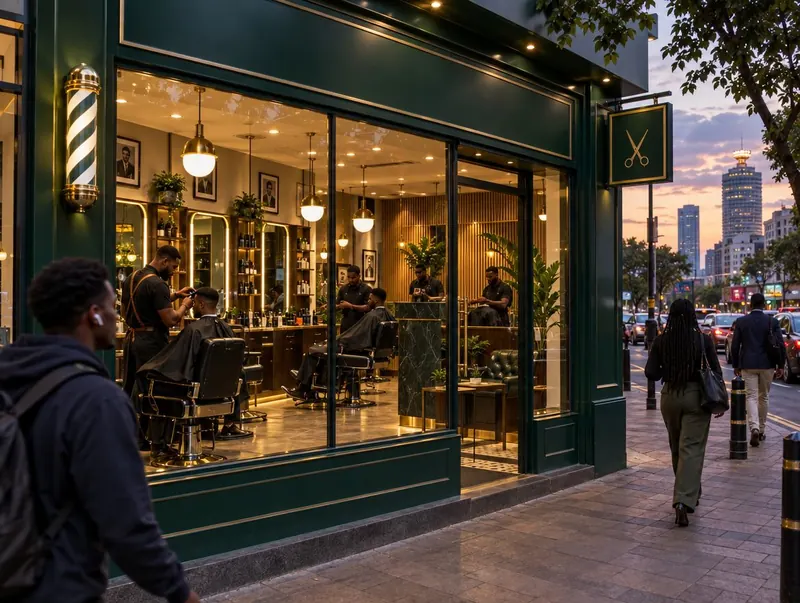
Check the location at the times you intend to trade.
Spend time outside the premises on an ordinary weekday, after work and at the weekend. Look at who passes, where people can stop, nearby competition and whether your intended customers use the area at those hours.
Ask the landlord about water, electricity, alterations, signage and the full amount payable before you get the keys. Get the proposed terms in writing. A small difference in monthly rent is less useful than knowing whether the unit can support the services you intend to offer.
Write your observations into a simple business plan. Keep facts separate from guesses so you know which assumptions need testing.
What does it cost to start a kinyozi?
The total depends on the premises, condition of the room, equipment choices and money set aside for operations. There is no single price in this guide that fits every Kenyan location. The table below is an invented two-chair planning scenario, designed to show what to include. It is not a supplier quotation or a market-price survey.
| Budget line | Example allowance |
|---|---|
| Premises deposit and first rent | KES 45,000 |
| Fit-out, workstations and mirrors | KES 35,000 |
| Two chairs | KES 30,000 |
| Clippers, trimmers and other tools | KES 20,000 |
| Capes, towels and hygiene supplies | KES 8,000 |
| Opening consumable stock | KES 5,000 |
| Launch materials and local promotion | KES 5,000 |
| Operating cash reserve | KES 60,000 |
| Subtotal before permits and contingency | KES 208,000 |
| Business registration, county requirements and contingency | Add the actual amounts you confirm |
Do not read the subtotal as “KES 208,000 is enough to open.” It excludes the last line, and your actual commitments may be very different. The point is to see the whole list rather than the price of a chair alone.
Download the editable planning workbook and obtain itemised local quotes. The equipment guide includes questions to ask about delivery, spare parts and condition.
Check registration and county requirements early.
The Business Registration Service directs registration applications through eCitizen and publishes a fee schedule. Registration and permission to operate from a particular premises are separate checks. Ask the county about the requirements for your business, services and location.
For a Nairobi premises, use the official Nairobi services portal as a starting point. If you are opening elsewhere, use that county’s official channels. Verify the relevant permits and any premises conditions before paying for a fit-out.
Also confirm your record-keeping and invoicing obligations. KRA’s eTIMS information is a useful official resource. Choosing a booking or POS system does not by itself establish that every requirement has been met.
Start with a menu and team you can manage.
Choose the services you can deliver consistently with the equipment and staff available. Agree prices, realistic durations and who can provide each service. A small menu you run well is easier to schedule than a long menu of services you rarely perform.
Agree how staff are paid, then check what that arrangement leaves for the shop. Use the commission example and the monthly profitability calculator before relying on your expected turnover.
Have a record ready for the first paying customer.
Record every service from opening day: what was done, the price, the barber and how it was paid. Count cash separately from M-Pesa and keep purchases out of the sales total. Starting with a small team makes it easier to teach the routine.
Put the booking link and opening hours where customers can find them. Ask early customers how they heard about you and what would make the next visit easier. Our marketing guide gives you a few measured ways to build repeat visits.
At the end of the first week, compare actual visits, sales and expenses with your plan. Change the assumptions that were wrong; keep the record of what happened. That habit is more useful than waiting a month to discover whether the shop has enough cash for rent.
Return to the owner-guide library for daily operations, price lists and stock checks.
Get your first-week records ready.
You can see how bookings, services and payments would be recorded before asking your team to use the system.
Book an opening-plan demo